
Porsche
911
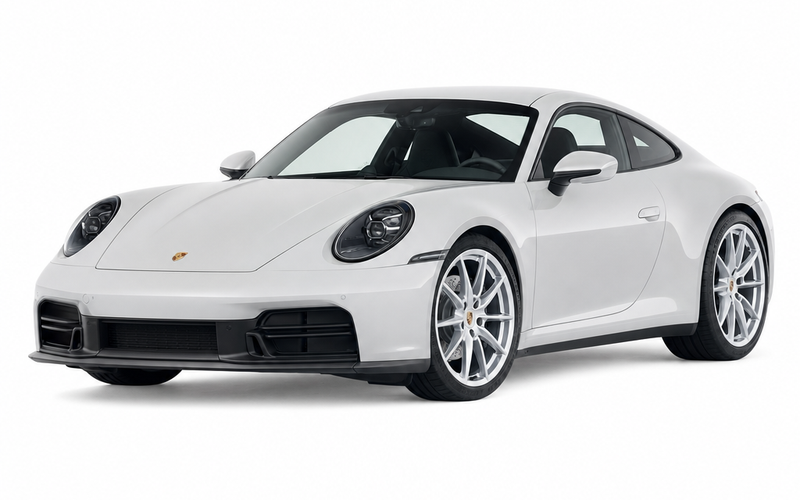


This estimate illustrates a vehicle lease. It is for information only and does not constitute a financing offer or approval. Actual payments depend on the negotiated price, residual value, money factor, mileage allowance, taxes, fees, credit, and lender terms.
This estimate illustrates vehicle financing. It is for information only and does not constitute a credit offer or approval. Actual payments depend on the purchase price, deposit, annual percentage rate, term, taxes, fees, credit, and lender terms.
This estimate illustrates a vehicle lease. It is informational, not a financing offer or approval. Actual payments depend on the negotiated price, residual value, money factor, mileage allowance, taxes, fees, credit, and lender terms.
New Porsche 911 offers
New Porsche 911 offers
Compare with similar cars
See how Porsche 911 compares with similar cars on price, payment, and specifications.
About this car
Porsche 911 Positioning: The Rear-Engine Benchmark in a Crowded Sports Car Segment
The Porsche 911 is the reference point for rear-engine sports cars, a layout it has effectively owned since 1963. Its direct rivals take different approaches: the Chevrolet Corvette uses a mid-engine design, while the Mercedes-AMG GT leans toward front-engine grand touring. No other volume-production model shares the 911's rear-mounted flat-six configuration, which shapes both its handling character and its weight distribution.
The main reason to consider it is the balance between everyday usability and track capability. That combination, plus historically strong resale values, makes the 911 a frequent benchmark for sports car pricing and financing comparisons.
Why Consider the Porsche 911
The 911's rear-engine layout delivers strong traction under acceleration and a handling balance that differs noticeably from the mid-engine Chevrolet Corvette. It feels more settled on rough roads and fits into tighter spaces, while still offering the sharp responses expected of a sports car.
The model range spans from the 380 hp base Carrera to track-oriented GT3 and Turbo variants, so buyers can match power, body style, and drivetrain to their actual needs.
- Historically stronger resale value than most sports car rivals
- Coupe, cabriolet, and Targa body styles on one platform
- 2+2 seating and a front trunk add everyday practicality
- Mature dealer and independent specialist network nationwide
Porsche 911 Specifications and Powertrains
Gasoline — Carrera and Carrera S. All US-market 911 Carrera models use a 3.0-liter twin-turbocharged flat-six engine. The base Carrera produces roughly 380 hp (385 PS), while the Carrera S develops approximately 444 hp (450 PS) with peak torque available from as low as 1,950 rpm. Both use an 8-speed PDK dual-clutch transmission, offered with rear- or all-wheel drive depending on the model. EPA fuel economy for Carrera coupes is approximately 18 mpg city and 24 mpg highway, varying slightly by body style and drivetrain (https://stc.aeplcdn.com/f/brochure/19/1248/dd4k6tf.pdf).
Gasoline hybrid — Carrera GTS. The Carrera GTS pairs a 3.6-liter flat-six with an electric motor and an electric turbocharger, a hybrid system focused on throttle response rather than electric-only driving. Porsche does not currently offer a full-electric 911 (https://www.porsche.com/usa/models/911/).
Payment Reality for the Porsche 911
The 911's starting price is the main driver of its monthly payment. The base Carrera coupe starts in the $120,000 range including destination, with S, GTS, Turbo, and GT3 trims priced substantially higher (https://www.porsche.com/usa/models/911/). Because the 911 historically depreciates more slowly than the Chevrolet Corvette and most other rivals, lease residuals tend to be stronger, which lowers monthly lease costs; loan balances also track resale value more closely over time. Your exact payment depends on down payment, loan term, interest rate, and trade-in value. Use the CarPayCheck calculator to model those variables against current local pricing before you negotiate with a seller.
Porsche 911 Warranty and Maintenance
Porsche covers the 911 with a 4-year/50,000-mile limited warranty, including 4 years of roadside assistance, plus a 12-year limited corrosion warranty on the body shell. Scheduled service intervals are typically every 10,000 miles or once per year, whichever comes first. Porsche dealers across the United States stock common 911 parts, and the model's long production run supports a deep independent service network — specialists often charge less than dealers for routine work such as oil changes and brake service. Extended warranty and prepaid maintenance plans are available from Porsche and third-party providers, so compare coverage terms before committing.
Who the Porsche 911 Suits
The 911 fits buyers who want a sports car they can drive every day — commuting, weekend trips, and occasional track days — without the compromises of a dedicated two-seater. Its 2+2 cabin and front trunk make it more practical than a Chevrolet Corvette for carrying luggage or small rear-seat loads. It rewards owners who prioritize resale stability, a mature service network, and factory configuration options. If the 911's price exceeds your budget, the Mercedes-AMG GT adds grand-touring comfort, and a late-model used 911 remains a viable alternative. Compare payments across these options on CarPayCheck before visiting a seller.
Frequently asked questions
Emissions and efficiency vary by powertrain, trim, test method, and model year. Verify the applicable EPA ratings and any state-specific rules for the exact vehicle before purchase.
Contact a participating seller to ask about availability and schedule a test drive. Stock and eligibility are controlled by the seller.
Warranty coverage varies by model year, trim, powertrain, original sale date, mileage, and market. Confirm the exact written warranty and remaining coverage with the manufacturer or seller.